Pressure
The June 6, 1944, Allied invasion of Normandy, France was the largest invasion in world history. It changed the course of WWII, and the course of history. Hollywood has chronicled the Normandy invasion many times, most notably by Steven Spielberg in his 1998 classic “Saving Private Ryan.” But while “Ryan” began with a 30-45 minute overview of the operation, Anthony Maras’ new film “Pressure” focuses on just one, seemingly small aspect of the military operation – the weather.
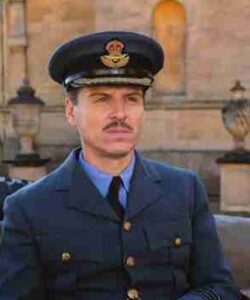 The characters
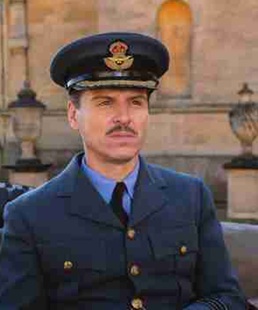
General Eisenhower’s longtime meteorologist was Colonel Irving Krick, whose preferred method of forecasting was the examination of similar weather patterns throughout history. But at the insistence of Winston Churchill, Eisenhower also brought in Group Captain James Stagg, a Scottish whiz of a forecaster who leaned on reams of meteorological data to fashion his predictions. Stagg and Krick clashed from the get-go, leaving Eisenhower to decide when to attack.
This is the premise behind “Pressure” – a premise which sounds so miniscule to the overall arch of the Normandy invasion that many filmgoers may choose to skip this one. Take my advice. Don’t. I can safely say that “Pressure” is not in the same league as “Saving Private Ryan,” but then what is? This is a tight, 1-hour 40-minute examination of the pressure Eisenhower was under to make the correct call – not to mention the dual meaning of atmospheric pressure.
The actors
Heading the noteworthy cast is Irish actor Andrew Scott (“1917,” “All of Us Strangers”) as the meticulous and unlikeable Stagg. He squares off against the confident but popular Col. Krick, played by Chris Messina (“Call Jane”). Attempting to keep the peace and make the right call regarding the timing of the invasion is Gen. Eisenhower, Brendan Fraser’s first major role since his Oscar-winning turn in 2022’s “The Whale.”
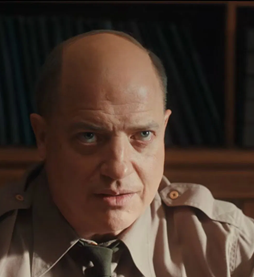 Brendan Fraser
Scott and Messina are both very competent in their respective roles, however their characters don’t grow. At least not until they are forced to cooperate on a potential window of opportunity between two major storm systems. Scott’s Stagg is as unpleasant at the end of “Pressure” as he is at the beginning. Messina’s Krick is just as pompous at the end too. But Fraser’s performance is the one that I keep coming back to, several days after my first viewing of this film.
Fraser’s Eisenhower is everything we might expect of the future U.S. president. He’s a genuinely nice guy, and a born leader. But he’s certainly not afraid to put his foot down and demand answers from the members of his team – which include the leaders of all branches of the military, and of all the Allied countries. Although it was Harry Truman who popularized the phrase, it can be safely said that “the bucked stopped here” with Dwight Eisenhower.
The “meat” of the film
Stagg proves a bit of a frustration to Ike in that when asked if he is 100% certain of his forecast of stormy weather during the initial planned invasion date, he responds with a mealy-mouthed explanation that no one can be 100% certain of the weather. Krick, meanwhile, tells Eisenhower exactly what he wants to hear – that the weather will be perfect on the planned day. Sensing there was a strong reason for Churchill’s recommendation of Stagg, Ike gives his opinion more clout than anyone else in the room desires. This interplay between the two forecasters and Ike’s eventual decision is the meat of “Pressure.”
Kerry Condon
Rounding out the excellent cast is Kerry Condon (“Three Billboards Outside Ebbing, Missouri,” “Train Dreams”) as Kay Summersby, Gen. Eisenhower’s personal assistant. Summersby makes it her point to get to know Stagg in a way that no one else does. And not in a romantic way. Stagg is happily married, and his wife is giving birth to their first child during the time he is sequestered with Eisenhower and his staff. But Summersby softens his rough edges, particularly as it pertains to letting Ike feel what Stagg is experiencing, as his wife faces a life-threatening medical situation while giving birth. Much as James Mangold used the Pete Seeger character to allow us into the mind of the non-effusive Bob Dylan in “A Complete Unknown,” Maras uses Summersby to let us see Captain Stagg as anything but a fastidious jerk.
Worth a look
Adapted by Maras and author David Haig from Haig’s own 2014 stage play of the same name, “Pressure” succeeds as a succinct footnote story to one of the greatest stories in human history – that of the invasion which altered the tide of the deadliest conflict ever played out. The meteorology of the invasion was not insignificant, but because it was simply one piece of the puzzle, “Pressure” can never be mentioned in the same breath as many larger-scale war epics, such as “Saving Private Ryan,” “Patton,” or even “Oppenheimer” (which wasn’t technically a war film, but was a large-scale saga nonetheless). This one isn’t a sweeping epic. Is it the year’s best film? No. But it’s definitely worth a look.
Andy Ray‘s reviews also appear on https://townepost.com/tag/film-review/