Andy Ray Picks the 2025 Oscars
 One of my biggest issues with the Oscars – and I won’t go over them all, lest we be here all day – is the prevalence of what I call “Consolation Prize Oscars.” These are awards bestowed upon those (actors and directors) who probably should have won by now, but for one reason or another, have not.
This year’s ceremony offers up several shining examples of this phenomenon. The likely Best Picture winner will be director Paul Thomas Anderson and his film “One Battle After Another.” It’s certainly a strong film – I had it on my Top Ten list for 2025 – but it’s by no means Anderson’s best work. IMHO, he should have won three times already – for 1999’s “Magnolia,” for 2007’s “There Will be Blood,” and for 2012’s “The Master.” Even by the conservative selections of Oscar voters, “There Will be Blood” should have been the consensus winner of ’07. But the actual winner that year was the Coen Brothers’ “No Country for Old Men.” That was also a good choice, but they should have won for their 1996 classic “Fargo.” And so on, and so on, and so on…
Remember when Paul Newman (finally) won Best Actor for 1986’s “The Color of Money?” No one would argue that was Newman’s best work. He could have won for any number of early-career works, including 1963’s “Hud.” But that year, the Academy bestowed its Best Actor award on Sidney Poitier for “Lilies of the Field.” Again, a good choice, but why didn’t win two years earlier for “A Raisin in the Sun?”
This year’s ceremony features several likely Consolation Prize Oscars. So (somewhat begrudgingly), let’s begin.
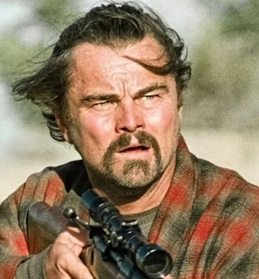 Oscars for Best Picture and Best Director
As previously stated, Paul Thomas Anderson is very likely to receive his first Best Director Oscar, and his film “One Battle After Another” is very likely to receive the Best Picture statuette. Again, I believe this is a decent choice, although it’s a far cry from Anderson’s best work. His “masterpiece” films are often intricate character studies, less concerned with plot development than in dissecting the motivations behind his characters’ actions. “One Battle After Another” is all plot – we learn very little about what makes the characters tick – which includes an edge-of-your-seat final hour.
But a better choice this year would be Josh Safdie’s “Marty Supreme,” which “out-Andersons” Anderson’s film. It’s an infectious, frantically paced dive into a young hotshot ping-pong whiz who talks and cons his way into participating in a world championship. He forms relationships with almost anyone who crosses his path, that he believes may be able to help him later – including a rich businessman played by “Shark Tank” regular Kevin O’Leary, in one of the best film debuts by a non-actor in cinema history. (And you can almost guess he was omitted from the Best Supporting Actor category, can’t you?)
“Marty Supreme” is the type of film that enraptures its audience from the first frame and never lets go – in other words, just like the typical Paul Thomas Anderson film. But where “One Battle After Another” has just a bit of a been-there-done-that feel, “Marty Supreme” is completely unique – and not one you’ll soon forget. Safdie and his film get my nod for this year’s best.
 Oscar for Best Actor
Here again, the Academy is very likely to bestow this honor on Leonardo DiCaprio. And while he is typically strong in “One Battle After Another,” he won already – for the terrible 2015 film “The Revenant” — and even that was a Consolation Prize Oscar. He should have won previously — at the very least for 2013’s “Wolf of Wall Street,” if not also for 2008’s “Revolutionary Road,” and/or 2004’s “The Aviator.” So, this award will be a Double Consolation Prize Oscar.
Much as I would love to pick Timothee Chalamet as the title character in “Marty Supreme” (who was decidedly better than DiCaprio), my vote here would have to go to Ethan Hawke for his rambling, heartbreaking turn as lyricist Lorenz Hart, recently dumped by songwriter Richard Rodgers in favor of Oscar Hammerstein in 1943. Hawke allows us to feel Hart’s pain and agony as he drowns his sorrows in booze on opening night of Rodgers & Hammerstein’s “Oklahoma!” – a musical which Hart dismisses as lightweight, all the while seething that it was not he who penned its lyrics.
I believe Hawke gave the best performance of the year 12 years ago for “Boyhood,” and was also very strong the next two years in “Maudie” and “First Reformed.” He’s one of our greatest living actors, and he deserves to win this year. And unlike the academy, I’m choosing Hawke based solely on his performance in “Blue Moon” – regardless of whether I thought he should have won previously. If the Academy bypasses DiCaprio in favor of Hawke, my night will be complete.
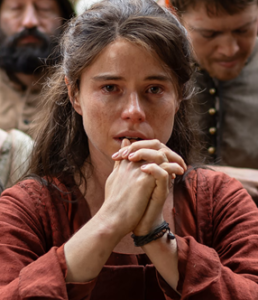 Oscar for Best Actress
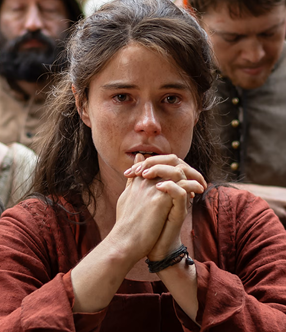
Although Kate Hudson was very good in “Song Sung Blue,” Irish actress Jessie Buckley is a shoo-in for Best Actress for her heart-wrenching turn as Agnes Shakespeare, wife of the famed playwright, in “Hamnet.” The grief she displays at the tragic loss of her son is agonizing. But the redemption she shows when viewing her husband’s “Hamlet” for the first time seals the deal. Buckley is one of those actresses who is always excellent.
But here again – and do you see a pattern here? – she should have one for her brilliant breakout work in 2018’s “Wild Rose” – a film for which she was not even nominated. Of the nominated actresses, Buckley gets my vote this year. But I must wonder, where on earth is 96-year-old June Squibb who gave the performance of a lifetime in this year’s “Eleanor the Great?” How the Academy could leave her off their shortlist is beyond me.
Oscar for Best Supporting Actor
It’s hard to say where the Academy will go here, but I would have to think the two front-runners are the two nominees from “One Battle After Another” – Benicio del Toro, hilarious as a touchy-feely martial arts expert who helps DiCaprio’s character escape from the military thugs chasing him, and Sean Penn, also hilarious as the corrupt officer leading the search for DiCaprio.
I realize both del Toro and Penn have won before (Penn twice), but theirs are the two best performances nominated in this category. My vote goes for Penn. Yes, he plays his character over-the-top, but in a necessary way. If Penn’s performance is not exaggerated, the entire film fails. It’s in part because of his character’s importance to the plot that I pick Penn here.
 Oscar for Best Supporting Actress
In my opinion, the best supporting actress performances I saw this year were (in no particular order) Margaret Qualley as an up-and-coming Broadway production designer who befriends Lorenz Hart in “Blue Moon,” young British actress Erin Kellyman, who strikes up an intergenerational friendship with June Squibb’s character in “Eleanor the Great,” Felicity Jones as the protagonist’s wife in Clint Bentley’s “Train Dreams,” local actress Chase Infinity as DiCaprio’s kidnapped daughter in “One Battle After Another,” and Marisa Abela as a high-level intelligence expert in Steven Soderbergh’s “Black Bag.” Guess what? Not a single one of them has been nominated.
The irony here is that Teyana Taylor is nominated for “One Battle.” She plays DiCaprio’s wife, who chooses to continue her life as a revolutionary, leaving DiCaprio to raise their daughter. Her character disappears early in the film and is much less intricate to the proceedings than Infiniti’s.
Personally, I don’t care which actress wins this category. And I have no clue which one the Academy will pick. So, a rare “no vote” for me.
 Screenplay Oscars
Here, my choice for Best Original Screenplay goes to Ronald Bronstein and Josh Safdie for the aforementioned “Marty Supreme.” It’s the year’s best film, I had it #1 on my Top Ten List, and Chalamet’s performance is spot-on perfect. But the writing! Oh my, the screenplay for “Marty Supreme” is its strength. Completely enrapturing from the opening shot to the final credits, Bronstein and Safdie have written an Anderson-esque masterpiece which is superior to Anderson’s offering this year. I have no idea which nominee the Academy will pick.
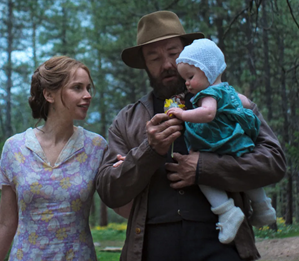
For adapted screenplay, they are likely to go with Anderson, who adapted Thomas Pynchon’s 1990 novel “Vineland.” But I was enamored with “Train Dreams,” which director Clint Bentley adapted from Denis Johnson’s novella of the same name. “Train Dreams” is a beautifully shot and understated look at a logger who also helped lay the tracks for the great pacific northwest railroad system during and after World War I. Joel Edgerton is perfectly cast in the lead role as a soft-spoken man who witnesses the industrial and technological advancement of the United States, even as he ponders his ever-diminishing role in shaping it. “Train Dreams” is like a faint whisper of a film which will stay with you forever.
Conclusion
As the years progress, I feel increasingly cynical about the Academy. When I was in college, I won a General Cinema contest for correctly predicting all the major winners for the Oscars honoring the best of 1984. Now, I hazard to even make predictions. The Academy seems to honor less deserving work providing that work aligns with its political and cultural slant. Nominees are promoted or discounted based, in large part, on what they say and post. I prefer to look solely at their work.
Much as with the Olympics, the Oscars should strive to honor those most deserving. Forget politics. Forget culture. And for heaven’s sake, please eliminate the “Consolation Prize Oscars!” Unfortunately, this will not be the year for any movement in that direction.
Andy Ray‘s reviews also appear on https://townepost.com/tag/film-review/