The Testament of Ann Lee
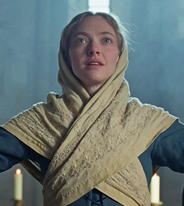 Ann Lee was known as the founder, and first leader, of the Shakers, an evangelical religious sect formed in England during the mid-1700s. In 1774, Ann led a small group of followers to the new world to settle near Albany, New York. After her death a decade later, the Shaker movement spread – first throughout New England, and eventually as far west as Ohio and Kentucky. So named because of their propensity to shake eccentrically during worship services, the Shakers were never as large a denomination as the Puritans, Calvinists, or Quakers. And therefore, not nearly as well known or remembered.
Mona Fastvold’s latest film “The Testament of Ann Lee” attempts to change that, although she succeeds only halfway. Co-written with Brady Corbet, Fastvold’s screenplay does an adequate job of familiarizing us with a religious movement most of us know nothing about. What we are not privy to is any kind of background regarding any of the Shakers’ beliefs.
Primary cast
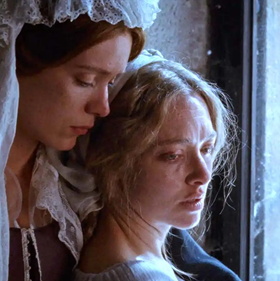
Ann Lee is played by Amanda Seyfried, who was excellent in a supporting role in Paul Schrader’s “First Reformed” — another film exploring religion in America, albeit with deep, well-drawn characters. Lewis Pullman (Bill’s son) plays Ann’s supportive brother William Lee, a co-founder of the Shaker movement. And Thomasin McKenzie (“Leave No Trace,” “Jojo Rabbit”) is Ann’s best friend Mary, who also serves as the film’s narrator.
 History without details
We learn the history of the Shaker movement, first in England then in what would soon become the United States. But Fastvold’s and Corbet’s original screenplay proceeds more like a check-off list of events and happenings than it does a real exploration of the Shaker faith. Often referred to as the “Shakin’ Quakers,” the Shakers shared much of the same ideology as the Quakers. Both believed in pacificism, equality of the sexes, and opposition to slavery. The Shakers added a charismatic element to their worship, and they also believed in celibacy – a value which manifested after Ann’s four children all died before the age of one.
Ann’s blacksmith husband Abraham (Christopher Abbott) is not keen on the celibacy requirement and eventually leaves the Shakers because of his desire for sexual relations. Unfortunately, “The Testament of Ann Lee” fails to explore the celibacy rule in any depth, never questioning how the denomination is to grow, given this restraint. Would all new members have to come from outside the sect? Fair question. And no answer here.
Pacifism and slavery
We also learn that, like the Quakers, Amish, and Mennonites, the Shakers were pacifists – a tradition which upset Americans tasked with fighting the British for American freedom. The pacifist factions were seen as receiving a “free ride,” given their aversion to taking up arms for any cause. I would love to have seen Fastvold concentrate a good chunk of her narrative on this aspect of the faith.
Same with slavery. Upon their arrival in the new land, Ann and her followers create a ruckus when they view slaves being sold in an outdoor market. This short scene shows us the Shakers – like the Quakers – possessed an abhorrence to the practice of slavery. But why? Fastvold never provides us with any background.
 Too much music
Instead, we’re privy to endless musical scenes, in which composer Daniel Blumberg has adapted traditional Shaker hymns into long, boring musical numbers. And yes, the characters sing. So, “The Testament of Ann Lee” is to be considered a musical. But the all-too-similar songs are downbeat, dispirited dirges punctuated by constant trembling and rhythmic agitation. It looks like the first religious rave. And much as I love music, the music here is nothing I want to watch or listen to. A couple numbers would allow us to get the idea without beating us over the head with it.
For that matter, Fastvold could have eliminated most of the music and tightened the film’s running time to about 90 minutes. Add the missing background details and “The Testament of Ann Lee” would have been entertaining and educational. The end result is neither.
“The Brutalist”
And the saddest aspect of “The Testament of Ann Lee” is that Fastvold and Corbet are the writing/directing team responsible for last year’s instant classic “The Brutalist,” which won Adrien Brody a Best Actor Oscar. That sweeping epic played out like the true story of a forgotten architect whose life journey mirrored that of 20th Century America. It was an hour longer than “Ann Lee,” but seemed shorter because it was chock full of necessary and intriguing background information regarding its characters. Ironically, “The Brutalist” was an original story which felt real; “The Testament of Ann Lee” is a true story which feels imagined. It’s just simply too long, too weird, and not deep enough to hold our interest.
Andy Ray‘s reviews also appear on https://townepost.com/tag/film-reviews/